Ranked #49 of 74 · Updated October 2026
Mindswap review
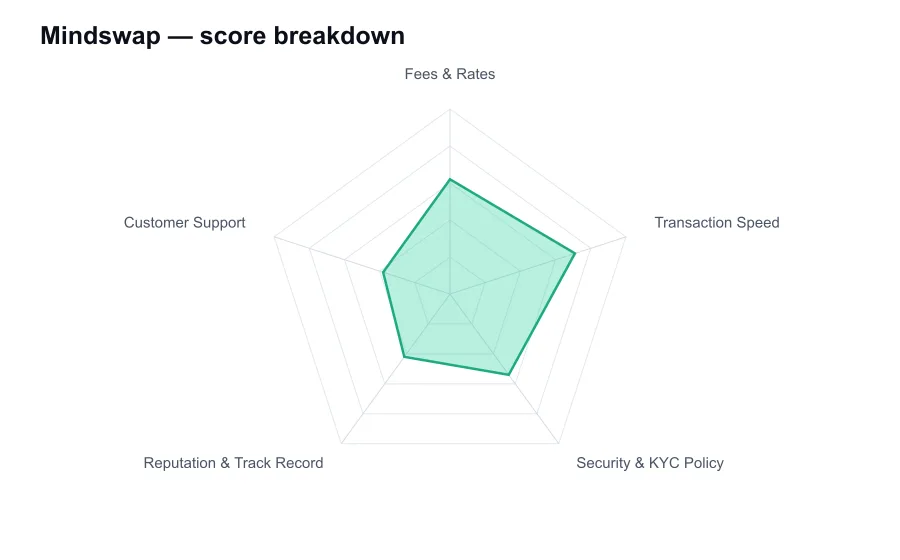
Mindswap scores 5.5/10 overall in our independent review, measured against every other provider we've compared, strongest on Transaction Speed (7.1/10) and weakest on Customer Support (3.8/10).
Noncustodial swaps · Fantom network · No routine KYC · Liquidity pools
MindSwap belongs to the early wave of decentralized exchanges built around the Fantom ecosystem. Its pitch was familiar but appealing at the time: swap tokens from a wallet, supply liquidity, farm rewards, and avoid the account opening process of a centralized exchange. That model made sense when Fantom transaction costs were tiny and its DeFi scene was moving quickly. The problem is that the market MindSwap was built for has changed dramatically, and the product now feels more like a surviving artifact of that cycle than a venue competing seriously with today's better funded decentralized exchanges.
The exchange uses an automated market maker model. Users trade against liquidity pools rather than placing orders into an order book, so the quoted price depends on pool depth and the size of the trade. That is standard DeFi machinery, but it matters more on a smaller platform. A swap can be confirmed cheaply and quickly on Fantom while still delivering a poor effective price because of price impact. New users often focus on the network fee and miss the far larger cost hidden in thin liquidity.
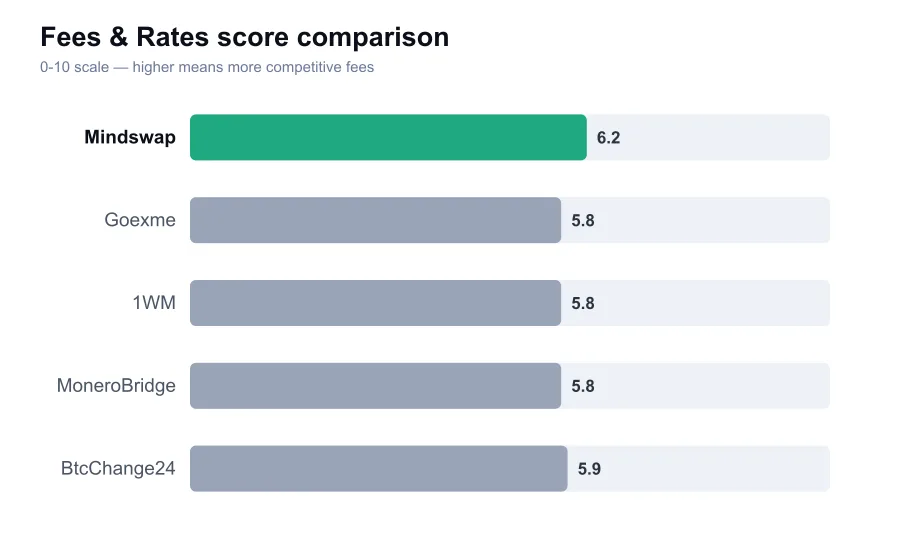
MindSwap's historical attraction was low cost. Fantom transactions generally cost pennies rather than the dollars, or occasionally much more, associated with Ethereum mainnet. For modest trades, that can make the interaction feel pleasantly frictionless. There is no conventional deposit fee, bank transfer charge, or separate withdrawal processing fee because assets move directly from a connected wallet. That is a real advantage for people already holding assets on Fantom.
The catch is that cheap execution is not the same thing as cheap trading. MindSwap's swap fee structure, pool economics, and token incentives have varied over time, and a user should inspect the live transaction preview rather than trust an old promotional percentage. More importantly, liquidity is the deciding cost. A route with a low visible fee can still be worse than a route through a larger Fantom venue or a cross chain aggregator if the pool is shallow. For liquid blue chip pairs, compare the final token amount, not the fee headline.
I would not use MindSwap for a large trade without checking several venues. A small swap of an established Fantom asset may settle cleanly in seconds, but an unusual pair can move sharply between the quoted amount and the executed amount. Slippage settings are therefore not cosmetic. Set them too tight and transactions fail during active markets, wasting gas. Set them too loose and you give a thin pool room to fill you at a price you would not have accepted on a deeper exchange.
Speed is one of the few areas where the underlying chain still gives MindSwap a decent story. Fantom confirmations are normally quick, and a straightforward swap does not involve the custody queue, compliance review, or manual withdrawal approval that can slow centralized platforms. In practical terms, a routine transaction is usually a matter of network confirmation rather than business hours. Bridging money into Fantom is a separate job, and that is often the slower and riskier part of the journey.
MindSwap does not ask users to submit identity documents for ordinary wallet based use. There is no familiar sign up flow, no password reset desk, and no KYC gate before a swap. Privacy minded users will see that as a positive. It also means users bear the operational burden themselves. Send funds on the wrong network, approve a malicious contract, or lose the wallet seed phrase, and there is no account department that can reverse the result.
The security picture is therefore mixed. Noncustodial design limits the risk that a centralized operator freezes customer balances or mismanages a large exchange wallet. Yet smart contract exposure replaces that risk with another one. Every approval gives a contract spending authority, and older DeFi apps deserve more skepticism, not less. Before connecting a meaningful wallet, I would verify the official contract addresses through current community channels, inspect token approvals, and use a separate wallet with only the amount intended for the trade.
Historical audits and public code can be useful signals, but neither is a permanent safety certificate. Audits examine a specific code version and cannot guarantee pool liquidity, front end integrity, or the safety of every token displayed in an interface. MindSwap's age gives it more history than a new anonymous farm, but it does not give it the continuing security resources of Uniswap, Curve, or a major centralized exchange. That distinction should affect position size.
Reputation is where MindSwap loses ground. It was recognizable in Fantom's busy 2021 period, but recognition from a bull market is not the same as present day relevance. Product activity, liquidity, developer momentum, and public communication all matter. The evidence available to a retail user is much thinner than it is for mainstream competitors, and that lack of clarity is enough to keep this from being a first choice for anyone who values dependable market access.
Support is also limited by the decentralized model and the project's smaller footprint. Community channels and documentation may help with basic navigation, but they are not a substitute for a staffed support operation. If a transaction is pending, the first useful tools are the Fantom block explorer and the wallet transaction details. If you have interacted with a scam token or confirmed an unfavorable swap, support cannot undo it. That is not unique to MindSwap, but users should understand it before treating a DEX like a consumer app.
The interface is simple enough for someone who already knows MetaMask or another compatible wallet. Connecting, selecting a pair, reviewing a quote, and confirming a transaction is not difficult. The harder part is judging whether the token is legitimate and whether the route is economically sensible. MindSwap gives little protection against a bad token decision. It assumes the user has done the research.
There are better places to start for most people. A newcomer seeking fiat purchases, clear statements, and human help should use a regulated centralized exchange in their jurisdiction. A DeFi trader who specifically needs Fantom liquidity should compare live quotes with larger Fantom protocols and aggregators before settling on MindSwap. It can still be a functional tool for a small, intentional wallet swap, but its narrow ecosystem position makes it hard to recommend as a primary venue.
My view is blunt: MindSwap is a niche legacy DEX, not a broadly compelling exchange. Its noncustodial access and low Fantom network costs are useful, especially for experienced users making small trades in assets they understand. But the thin liquidity risk, limited support, and uncertain level of current project momentum overwhelm those benefits for larger or less experienced users. Treat it as an optional route to check, not a platform to trust blindly with a serious portfolio.
Who it suits
MindSwap fits experienced Fantom users who already hold assets on the network and can independently assess pool depth, token contracts, and slippage. It may suit a small swap where its live quote is genuinely competitive. Beginners, large traders, and anyone wanting fiat access or account support should look elsewhere. It is not a sensible primary exchange for long term portfolio management.
The practical view
Strengths and trade-offs
What stands out
- Wallet based access without routine KYC
- Low cost Fantom network transactions
- Direct self custody of trading assets
- Fast settlement for straightforward swaps
What to weigh
- Liquidity can be thin outside common pairs
- Limited evidence of major current ecosystem momentum
- No recovery path for wallet or transaction mistakes
- Support is largely community driven
Scorecard
How the score is built
Verdict
My take on Mindswap
MindSwap still captures the appealing part of early Fantom DeFi, quick wallet swaps with very low network friction. That is not enough by itself in a market where liquidity, security maintenance, and reliable support matter more than a cheap confirmation. The platform is usable, but it asks the user to supply most of the judgment and all of the risk control. Check it as one possible route, then compare the final execution price before committing funds.
Review questions
Mindswap FAQ
Does MindSwap require KYC?
Ordinary wallet based use does not normally require an identity check. You connect a compatible wallet and approve transactions yourself, which also means there is no account recovery process.
Are MindSwap swaps cheap?
Fantom gas costs are usually low, but gas is only part of the cost. Check the final amount received, pool liquidity, price impact, and the displayed swap fee before confirming.
How fast do MindSwap swaps settle?
A normal swap generally settles after Fantom network confirmation, often quickly. Bridging funds into or out of Fantom can take longer and introduces separate bridge risk.
Reader experiences
What users report
Continue your comparison
Read across the full ranking before deciding which provider best fits your own needs.
Compare providers