Ranked #61 of 74 · Updated October 2026
BTC2Pay review
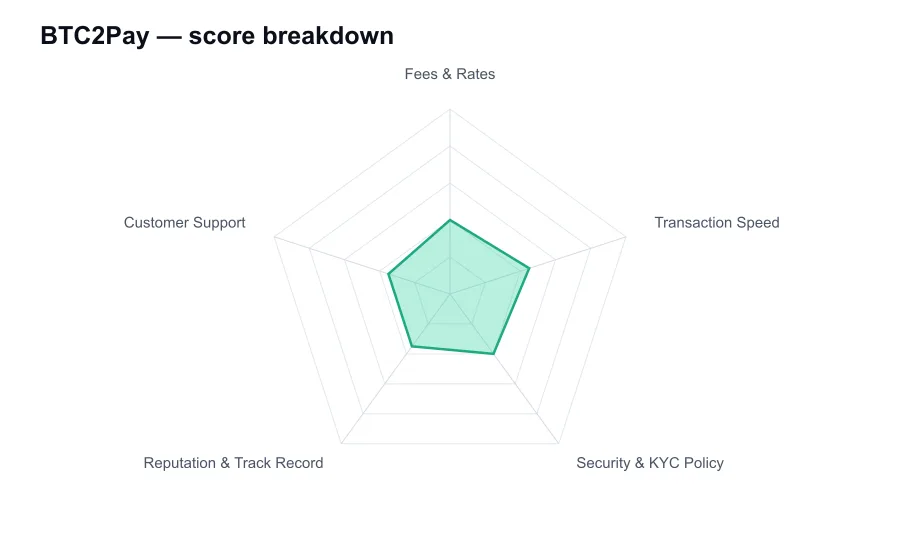
BTC2Pay scores 4.0/10 overall in our independent review, measured against every other provider we've compared, strongest on Transaction Speed (4.5/10) and weakest on Customer Support (3.5/10).
Crypto transaction service · Quote-based exchange flow · Wallet-to-wallet transfers
BTC2Pay appears to sit in the small crypto payment and exchange-service corner of the market rather than alongside heavyweight retail exchanges such as Kraken, Coinbase, or Bitstamp. That distinction matters. A compact service can be useful for a quick conversion or payment flow, but it doesn't automatically deserve the same trust you would place in a regulated venue with years of public reporting. BTC2Pay's limited public footprint is the first thing a careful buyer should notice.
The service is most likely to appeal to users who value a straightforward crypto transaction over a broad trading terminal. There is no obvious reason to approach it expecting advanced charting, deep order books, staking choices, audited reserves, or institutional-grade account controls. Think of it as a transaction provider first. That can be perfectly legitimate, but it means the details around rate formation, custody, and settlement become more important than promotional language.
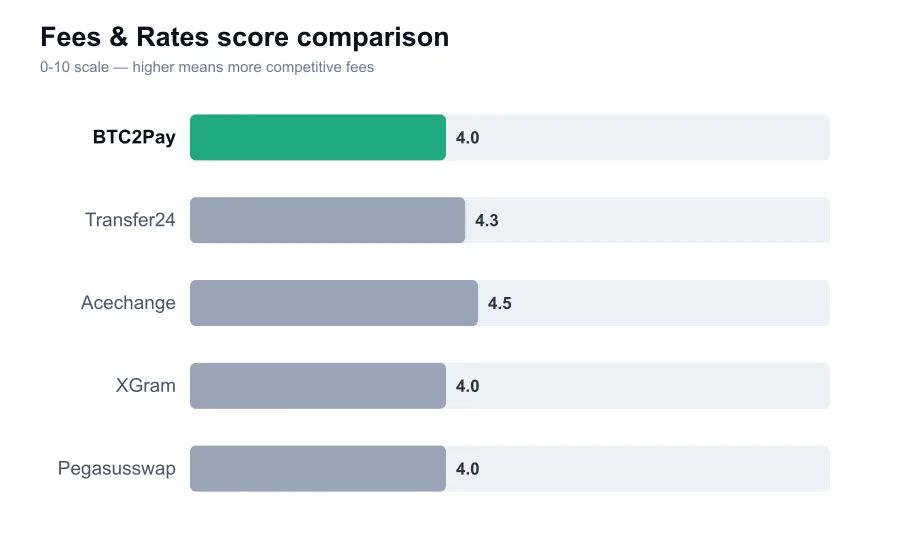
Fees are not an area where BTC2Pay inspires much confidence from the outside. I couldn't find a clearly established public fee schedule that lets a customer compare a fixed percentage, spread, network fee treatment, and possible payment-method charge before starting an order. That is a weakness. The true price of a simple exchange is not the headline amount sent, it is the gap between the market rate and the amount ultimately received.
A provider can advertise low or even zero service fees while earning through its exchange spread. There is nothing inherently improper about that model, and many instant exchange services do it. The problem is that users need a clean quote and enough time to inspect it. With BTC2Pay, I would treat every quote as a live price to be checked against CoinGecko, Kraken, or another liquid market before committing funds.
Small exchange services also tend to be less forgiving around network fees. A Bitcoin withdrawal may look inexpensive until a congested network turns the practical cost into something far less attractive. The same applies to token transfers on Ethereum, Tron, or BNB Smart Chain. BTC2Pay should show the exact network, destination amount, and any fee deduction before confirmation. If those details are unclear, stop the transaction rather than hoping support will correct it later.
Speed is similarly dependent on the transaction type. Crypto deposits can only be processed after the relevant blockchain confirmations, so no provider can make Bitcoin final instantly. A service can, however, avoid adding unnecessary manual review after funds arrive. BTC2Pay does not have the public operational transparency needed to promise consistently fast settlement, and I would not use it for a time-sensitive payment where a missed window would be expensive.
For routine, modest-size transfers, an instant-exchange style workflow may be adequate if the quoted route is available and the destination address is correct. Larger transactions are a different story. A delayed compliance check, a rate expiry, or a wallet issue can turn a supposedly quick swap into a support case. Established competitors publish clearer status pages, supported-network documentation, and service-level expectations. BTC2Pay does not appear to offer that same reassurance.
Security is where the gap between a known exchange and a lightly documented provider becomes hard to ignore. I found no strong public evidence of audited proof of reserves, a well-documented licensing framework, named executive accountability, or a mature security program. Lack of public evidence isn't proof of wrongdoing, but it is a practical reason to limit exposure. You should never leave a balance sitting with a service like this after a conversion has completed.
The KYC position also needs to be read carefully. A service may permit some transactions with limited information yet reserve the right to request identification, source-of-funds material, or wallet explanations later. That is common across the industry. Users who interpret a light onboarding process as guaranteed anonymity are often disappointed when a transaction triggers a compliance review. Before sending funds, read the current terms and ask whether verification can be required after deposit.
That policy ambiguity creates a real user risk. If your order is paused after you have sent coins, you may be asked for documents you were not prepared to provide. You should know the refund path, the timeframe, and whether any exchange-rate loss falls on the customer. BTC2Pay would be more credible with plainly written procedures for rejected verification, blocked jurisdictions, disputed transactions, and refunds to the original sending wallet.
Reputation is BTC2Pay's weakest practical category. It lacks the long, easily verifiable operating record and broad independent coverage that make a reviewer comfortable recommending a provider for meaningful sums. The crypto market has taught users that polished pages and fast replies are not substitutes for years of consistent execution. A thin public record does not make BTC2Pay automatically unsafe, but it does mean it has not earned the benefit of the doubt.
Customer support is difficult to score highly where public evidence is limited. A responsive contact channel is helpful, but what matters is whether staff can resolve a delayed payout, a wrong network selection, a compliance hold, or an address dispute with clear records and realistic timelines. I would test support with a basic pre-sale question before funding an order. Vague, generic, or evasive answers should end the evaluation immediately.
BTC2Pay may suit someone making a low-value, non-urgent transaction who understands wallet networks and is prepared to compare the final quote against the market. It is not a compelling choice for first-time buyers, businesses processing customer payments, or anyone moving funds they cannot afford to have delayed. Those users should pay a little more for a venue with regulated operations, transparent pricing, and a proven support trail.
My view is blunt: BTC2Pay has not provided enough publicly verifiable substance to justify strong confidence. It may complete simple transactions without incident, but a reviewer should judge a financial service by its hard cases, not its best-case flow. Keep any test amount small, document every screen, and withdraw immediately after completion. Until BTC2Pay builds a deeper record of transparency and accountability, it belongs in the cautious-use category rather than on a preferred-provider list.
Who it suits
BTC2Pay is best approached by experienced crypto users testing a small, non-urgent transaction and checking the final quote against a liquid exchange. It is not a good first platform for newcomers who need phone support and clear protections. Businesses, high-value traders, and privacy-sensitive users should look for a provider with documented compliance, transparent pricing, and a longer operating record.
The practical view
Strengths and trade-offs
What stands out
- May suit small, straightforward crypto conversions
- Potentially simpler than a full trading exchange
- Useful only if the final quote is competitive
What to weigh
- Limited public fee transparency
- No strong independently verifiable track record
- KYC and hold procedures need close reading
- Not suitable for storing funds
Scorecard
How the score is built
Verdict
My take on BTC2Pay
BTC2Pay may be functional as a narrow transaction tool, but it has not earned a place among trusted default recommendations. The lack of easily verified pricing, security disclosures, and reputation signals outweighs the appeal of convenience. A small test can be reasonable if the rate is good and the terms are clear. For meaningful money, choose a better documented exchange or payment processor.
Review questions
BTC2Pay FAQ
Does BTC2Pay publish a clear fee schedule?
A clearly verifiable public all-in schedule is not readily established. Check the final destination amount, spread, network fee, and refund terms before sending funds.
Can BTC2Pay ask for KYC after a transaction starts?
Many crypto services reserve that right under compliance rules. Read the current terms before depositing and do not assume a light sign-up flow guarantees no later verification.
Should I leave crypto on BTC2Pay?
No. Use a self-custody wallet for funds you intend to hold. Small transaction providers should not be treated as long-term custodians.
Reader experiences
What users report
Continue your comparison
Read across the full ranking before deciding which provider best fits your own needs.
Compare providers