Ranked #62 of 74 · Updated October 2026

Acechange review
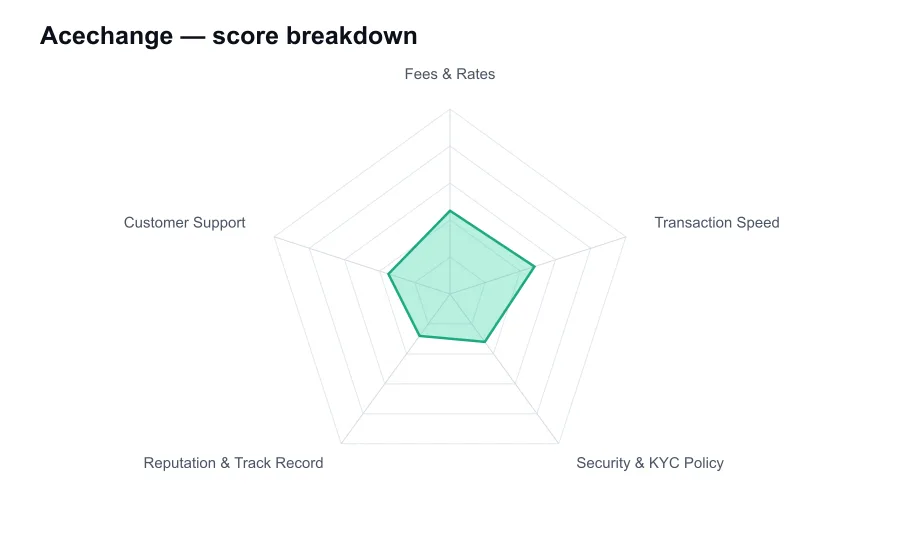
Acechange scores 3.8/10 overall in our independent review, measured against every other provider we've compared, strongest on Transaction Speed (4.8/10) and weakest on Reputation & Track Record (2.8/10).
Instant conversion model · Wallet to wallet transfers · Quote based swaps · Potential no account flow
Acechange is difficult to review in the same way as an established exchange because its public identity and verifiable operating record are far less clear than those of major platforms. The name has appeared in the crowded market for instant crypto exchange services, where a visitor enters an amount, selects two assets, and receives a quoted conversion without opening a traditional trading account. That format can be convenient. It is also a part of crypto where shallow due diligence can become expensive very quickly.
The first issue is basic verification. With a provider such as Kraken, Coinbase, or even a large noncustodial swap protocol, users can examine a substantial history of public operations, legal entities, product documentation, independent coverage, and ongoing customer discussion. Acechange does not offer that same level of easy, durable public evidence. A polished conversion page is not proof of reserves, licensing, liquidity relationships, or a reliable complaints process.
That does not automatically prove wrongdoing. Small exchange services can be legitimate and still have a limited public footprint. It does mean the burden of proof shifts heavily toward the user. Before sending funds, I would verify the exact domain through trusted current sources, look for clear legal and contact information, read recent independent reports rather than affiliate reviews, and test the process only with an amount I could afford to lose. If those checks cannot be completed, stop there.
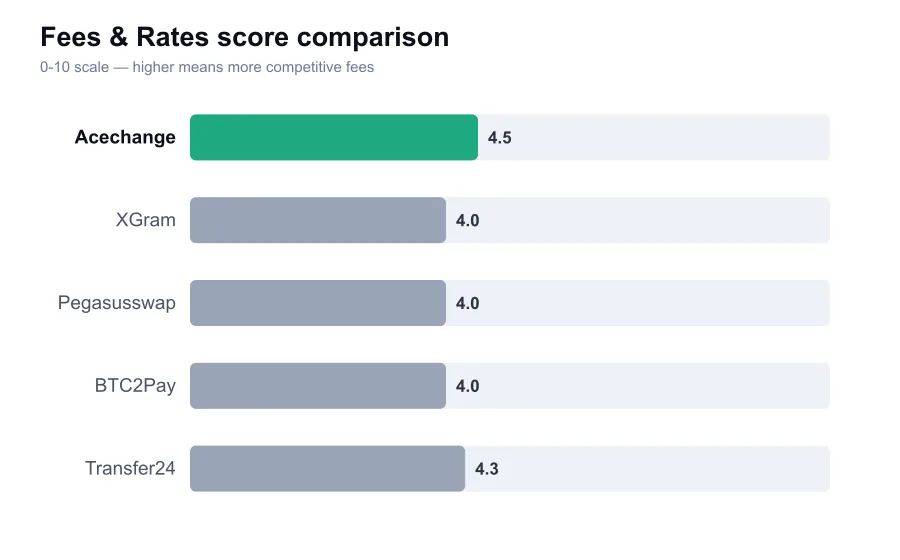
Pricing is especially hard to judge with an instant exchange. A site may advertise no fee or a very low fee while making its margin inside the exchange rate. The only number that matters is the destination amount after all spread, network costs, and any minimum or service charge. With an established provider, it is easier to compare order book prices or documented fee schedules. With Acechange, a user should obtain quotes from at least two established alternatives at the same moment and compare the actual output.
Fixed rate and floating rate quotes should also be treated differently. A floating quote can change while a blockchain deposit is confirming, particularly in a volatile market. A fixed quote may offer more certainty but can include a wider spread or strict timing conditions. If Acechange offers either option, read the displayed terms closely and capture the quote details before depositing. Vague language about rate adjustments is not acceptable when funds have already left a user's wallet.
Speed claims are similarly easy to overstate. An exchange can create a deposit address instantly, but the real process includes receiving confirmations, identifying the transfer, obtaining liquidity, executing the swap, and broadcasting the payout. Bitcoin and Ethereum deposits may need several confirmations. Network congestion, low fee transactions, wallet screening, and liquidity issues can all extend a conversion beyond the optimistic estimate shown on a homepage.
A credible provider explains those stages and gives the user a transaction identifier or status page that can be independently checked. Without transparent status information, a customer is left waiting after an irreversible deposit, which is one of the worst positions in crypto. I would not send an urgent payment through a little documented instant exchange. If timing matters, use a venue with a well understood withdrawal process or trade through a liquid self custody route.
Security is the largest concern. Instant exchanges are usually custodial for the brief period between receiving a deposit and paying the destination asset. That temporary custody is enough to create counterparty risk. Users cannot simply say the service is noncustodial because they began and ended with their own wallet. During the conversion, the operator controls the funds, and the customer depends on its systems, liquidity partners, policies, and willingness to pay out.
KYC and compliance policies need special attention. Some instant exchange services market themselves as registration free, yet reserve the right to pause a transaction and request identification or source of funds documents after receiving a deposit. Such screening may be legal or necessary in some circumstances, but it is a poor surprise for a user who expected a fast anonymous swap. Acechange should be judged by the clarity of its live policy, not by a broad no KYC slogan.
I could not place Acechange in the same trust category as operators with transparent licensing, named leadership, extensive security disclosures, and a long record of independently documented customer outcomes. Lack of information is itself a risk factor in a financial service. It makes it harder to distinguish a temporary operational delay from a serious dispute, and it leaves users with fewer obvious avenues if something goes wrong. That deserves a low reputation score even if an individual small transaction succeeds.
Customer support is where small instant exchanges often reveal their real quality. A usable service should provide a support channel, transaction specific communication, and timely explanations when a conversion is delayed. Yet even responsive chat support cannot compensate for an opaque company structure or a missing escalation path. Do not confuse a fast reply before a deposit with proof that support will resolve a problem after custody has begun.
There are also common user errors that support cannot cure. Sending an unsupported asset, using the wrong network, omitting a required memo, or providing an incorrect destination address can lead to permanent loss. A careful platform warns aggressively about these issues. A careful user sends a small test only when the test itself has a purpose, then waits for the completed payout before sending more. Splitting a large conversion into several transfers can reduce the impact of a failure, though it also adds network fees.
For ordinary users, the better alternatives are obvious. A regulated exchange can be slower to onboard but offers clearer account controls, published fee schedules, and a more established dispute process. A major decentralized exchange lets the user retain custody, although they still must manage slippage and wallet safety. An instant service such as Acechange only makes sense if it delivers a clearly superior live quote and the user has independently verified the exact service being used.
My recommendation is cautious to the point of bluntness. Acechange has not earned the level of trust needed for a large or time sensitive conversion on the basis of a limited public footprint alone. If someone decides to use it, they should send only a small amount, record every quoted term and transaction hash, and avoid relying on it for funds needed that day. Most users will be better served by a provider with stronger transparency and a longer, independently visible record.
Who it suits
Acechange is only suitable for highly cautious, experienced users who can independently verify the exact service and are testing a very small, nonurgent conversion. It does not fit beginners, large transfers, business payments, or anyone who needs dependable support and clear compliance terms. Users seeking transparent pricing should compare established exchanges and major swap aggregators first. For most people, the safer recommendation is to look elsewhere.
The practical view
Strengths and trade-offs
What stands out
- Potentially simple wallet to wallet conversion flow
- May avoid a conventional trading account
- Useful only if a live quote is demonstrably competitive
What to weigh
- Limited verifiable public track record
- Rate spread may be less clear than advertised fees
- Temporary custody creates counterparty exposure
- KYC review and dispute handling may be unclear
Scorecard
How the score is built
Verdict
My take on Acechange
A crypto conversion service does not become trustworthy merely because it is quick to access. Acechange's limited verifiable footprint makes the usual risks of instant exchanges, custody during processing, spread opacity, delayed payouts, and compliance holds, harder to evaluate. There may be situations where a small test transaction works perfectly, but that is not the standard for a serious recommendation. Until transparency and independently visible reputation are stronger, it should be treated as a high caution option rather than a preferred provider.
Review questions
Acechange FAQ
Does Acechange require KYC?
Do not assume that an instant exchange is permanently no KYC. Services can request identity or source of funds information after receiving a deposit. Read the current compliance policy before sending funds.
How can I check Acechange's real fee?
Compare the final destination amount for the same trade against established providers at the same time. The visible service fee may not include the spread embedded in the quoted exchange rate.
Should I send a large amount to Acechange?
No large or urgent transfer is advisable without strong independent verification. If you choose to test any little documented instant exchange, use a small amount and wait for the completed payout.
Reader experiences
What users report
Continue your comparison
Read across the full ranking before deciding which provider best fits your own needs.
Compare providers