Ranked #37 of 74 · Updated October 2026

Satoshitango review
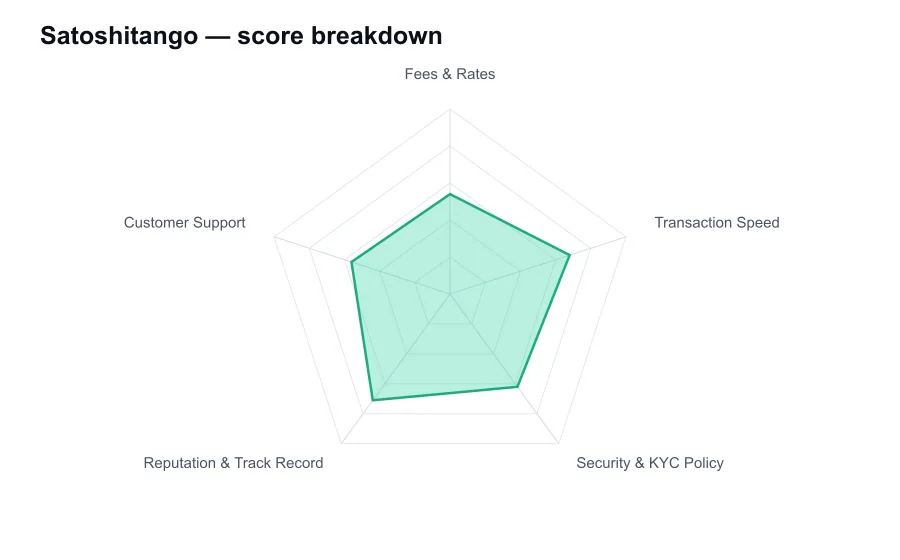
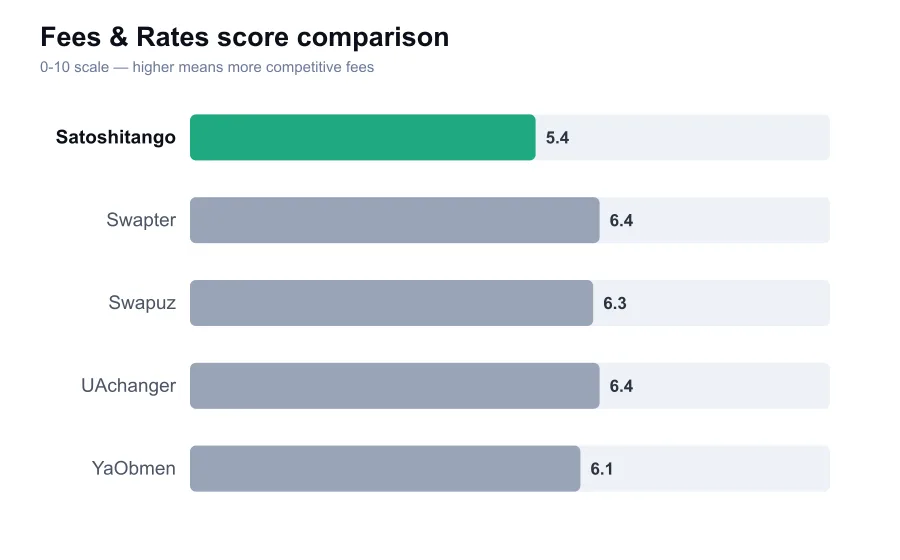
Satoshitango scores 6.2/10 overall in our independent review, measured against every other provider we've compared, strongest on Reputation & Track Record (7.1/10) and weakest on Fees & Rates (5.4/10).
Argentine peso access · Hosted crypto wallet · Bitcoin and stablecoins · Identity verified accounts
SatoshiTango is one of Argentina's older crypto names, a local on ramp that has survived several market cycles, exchange collapses, and the country's recurring currency problems. It is not trying to be Binance, nor should it be judged as a high frequency trading venue. Its appeal is practical: Argentinians can use pesos to access Bitcoin, stablecoins, and a limited group of major cryptoassets through a service built for local banking realities.
The company began operating in 2014, which gives it more history than many regional crypto brands that appeared during the last bull market. That longevity matters in Argentina, where a crypto provider's ability to keep local payment rails functioning can be more useful than a long token list. SatoshiTango has positioned itself closer to a broker and wallet than a sophisticated exchange. Beginners will understand the interface quickly. Active traders will find it restrictive almost immediately.
Its product menu has changed over time, but Bitcoin, Ether, USDT, DAI and other established assets have been central to the offering. Users can buy and sell through the app or website, hold assets in the hosted wallet, and in some cases make payments or use services tied to its local financial partnerships. The point is convenience, not deep market access. Someone seeking perpetual futures, advanced order routing, proof of reserve dashboards, or hundreds of altcoins is in the wrong place.
Pricing is the weak point, and it deserves a clear warning. SatoshiTango often presents a quoted buy or sell price rather than a clean exchange style maker and taker schedule. That makes the visible fee only part of the cost. The spread between the market price and the final quote can be meaningful, particularly during volatile periods or on less liquid assets. A user buying a modest amount of USDT may accept that friction. Someone rotating a large portfolio regularly should not.
Local deposit and withdrawal methods can also change the real bill. Bank transfers in Argentine pesos may be inexpensive, while card rails, cash related services, or certain payment partners can carry their own costs or limits. Crypto withdrawals have network fees, and those can be particularly painful on Ethereum during congestion. Before confirming a trade, check both the quoted exchange rate and the withdrawal charge. A low looking headline commission means very little if the quote is two or three percent away from a liquid global market.
Execution speed is generally good for the kind of service SatoshiTango is. Once a peso deposit is credited, a simple purchase is usually immediate because the platform is filling from its own available liquidity or quoted inventory. It doesn't require the user to wait for a matching order. That feels efficient for a first time buyer. The slower part is often the money movement before the trade, especially if a bank transfer is delayed by the sender, a payment method is under review, or local banking rails are having a difficult day.
Crypto withdrawals are less predictable. A request may be processed quickly, but the final arrival depends on SatoshiTango's internal review and the blockchain selected. Bitcoin can take from minutes to an hour or more depending on fees and blocks. Stablecoin transfers on cheaper networks can be quicker, while an ERC20 withdrawal may be both slower and more expensive. The service is adequate for moving savings into self custody, but it is not designed for traders who need guaranteed minute by minute settlement.
Account verification is part of the package, not an optional annoyance. Expect identity checks and requests for supporting information as transaction amounts or activity increase. That is normal for a regulated facing local business, and it is safer than a platform pretending compliance does not exist. Still, people hoping to buy crypto privately with no records will be disappointed. SatoshiTango's KYC approach reflects Argentina's financial environment and anti money laundering obligations.
On custody, the sensible assumption is that assets held in the account are under the company's control, not yours. The platform may use standard security measures, account verification, and internal controls, but it does not remove counterparty risk. SatoshiTango is not a bank deposit account, and crypto balances are not protected by the same kind of government deposit insurance that users may associate with traditional money. Enable every available account protection feature, use a unique password, and withdraw long term holdings to a wallet whose keys you control.
The firm's age earns it real credit. SatoshiTango has remained visible through years in which many Argentine crypto operators disappeared, changed ownership, or became impossible to contact. It has a recognizable local brand and understands the habits of customers dealing with pesos, inflation, and capital restrictions. That said, longevity is not a blank cheque. The company has not built the global reputation, transparent market infrastructure, or institutional disclosures associated with the largest international exchanges.
Its public reputation is mixed in the familiar way for local financial apps. Many customers value the ease of acquiring dollars linked stablecoins and Bitcoin without wiring money abroad. Complaints tend to involve verification delays, transfer questions, spreads, and the frustration of waiting for a human response during a time sensitive issue. Those complaints do not make the platform uniquely bad, but they do reveal its limits. You should not assume a small support team can deliver instant intervention during a market panic.
Support is available through the company's help channels and ticket based contact routes, but it is not a premium concierge service. Straightforward questions about account access or a pending transfer can be resolved reasonably. More complex compliance reviews may take longer, and a canned answer can be aggravating if funds are temporarily unavailable. Keep transaction receipts, wallet addresses, screenshots, and your account details organized before opening a case. That preparation makes a real difference with almost every exchange, particularly one operating across local payment networks.
Compared with Ripio, SatoshiTango feels smaller and more narrowly focused. Compared with Nexo, it offers more direct relevance for Argentine peso users but far fewer financial products. Compared with a global spot exchange, it loses badly on liquidity, order types, and price discovery. Yet those comparisons miss the practical reason it survives. It gives a resident of Argentina a familiar route between pesos and crypto without requiring them to navigate offshore banking or a complicated trading terminal.
My view is that SatoshiTango is useful as a local access point, not as a permanent crypto headquarters. It suits a cautious buyer who wants to convert pesos into a few established assets, understands that quoted prices include a spread, and plans to self custody meaningful holdings. It is a poor fit for frequent traders, large investors demanding transparent depth, or privacy focused users unwilling to complete KYC. Use it for convenience, compare the quote before every purchase, and don't confuse a convenient wallet with a vault.
Who it suits
SatoshiTango fits Argentine residents making occasional purchases of Bitcoin or stablecoins with pesos. It is most useful for beginners who value a local interface and straightforward bank transfer options. Frequent traders and users moving large amounts should compare global exchange pricing first. Privacy focused buyers and people seeking self directed DeFi access should look elsewhere.
The practical view
Strengths and trade-offs
What stands out
- Established Argentine crypto brand
- Convenient peso to crypto access
- Simple interface for first time buyers
- Useful route to major stablecoins
What to weigh
- Spreads are less transparent than exchange fees
- Limited tools for active traders
- KYC and review delays can interrupt transfers
Scorecard
How the score is built
Verdict
My take on Satoshitango
SatoshiTango has earned its place by being useful in a difficult local market, not by offering the industry's best trading conditions. Its age and local payment focus are meaningful advantages, especially for someone making a first peso based crypto purchase. The pricing model is the compromise, because spreads can quietly exceed the cost of a proper order book exchange. Treat it as a convenient bridge into crypto, keep large balances in self custody, and verify the final quote rather than trusting the marketing rate.
Review questions
Satoshitango FAQ
Does SatoshiTango require identity verification?
Yes. Account verification is expected, and additional information may be requested as transaction amounts or account activity increase.
Are SatoshiTango fees cheap?
Not necessarily. The final cost can be embedded in the buy or sell quote, so compare its displayed price with a liquid market before trading.
Can I withdraw crypto from SatoshiTango?
Yes, supported assets can generally be sent to an external wallet. Check the supported network, minimum amount, and withdrawal fee before confirming.
Reader experiences
What users report
Continue your comparison
Read across the full ranking before deciding which provider best fits your own needs.
Compare providers