Ranked #4 of 74 · Updated October 2026
Kamino review
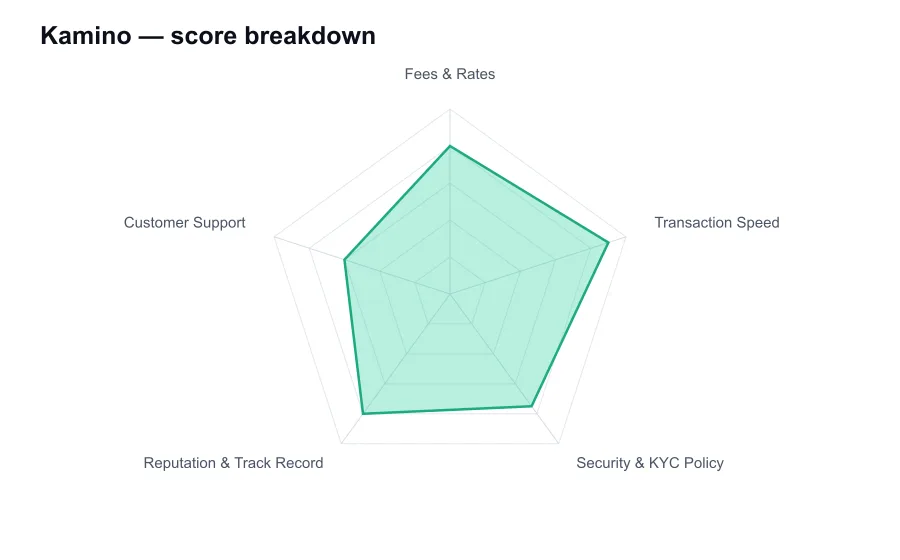
Kamino scores 7.9/10 overall in our independent review, measured against every other provider we've compared, strongest on Transaction Speed (9.0/10) and weakest on Customer Support (6.0/10).
Noncustodial · No-KYC · Solana Lending · Liquidity Vaults
Kamino is one of Solana's most important DeFi venues, though calling it simply a lending app misses the point. It combines overcollateralized borrowing, automated liquidity vaults, leverage tools and concentrated-liquidity strategies in one interface. That breadth makes it useful for active Solana users who want their capital working, but it also makes the product materially harder to understand than a basic token swap or savings account.
The lending side is the clearest starting point. Users deposit assets such as SOL, USDC, USDT, JitoSOL or liquid staking tokens into pooled markets, then borrow against eligible collateral. Rates are variable and set by utilization. If a pool has abundant supplied liquidity, borrowing can be inexpensive. As utilization rises toward the pool's target range, rates can climb sharply. This is normal money-market design, but it means a cheap position opened today can become expensive during a volatile Solana rally.
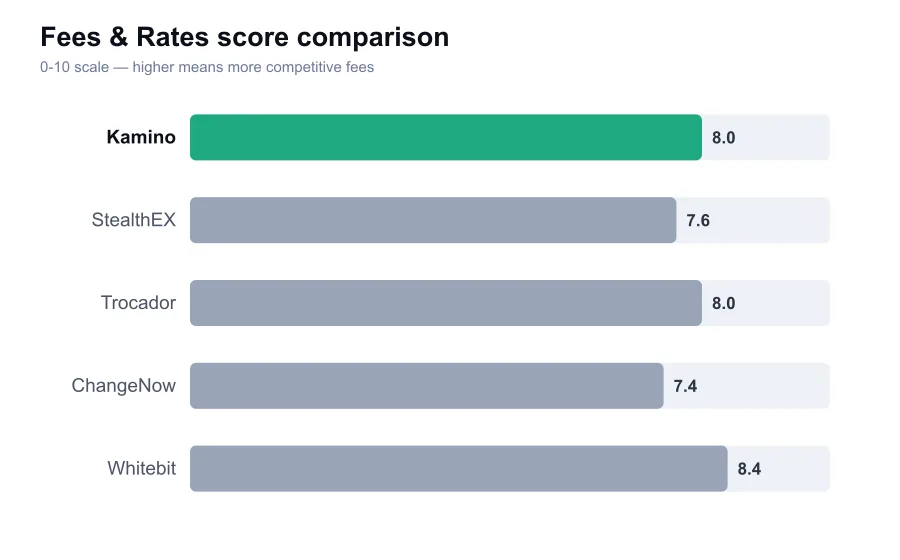
Kamino does not charge a simple retail trading commission that can be summarized in one line. Lenders earn variable yield after reserve factors, borrowers pay the displayed annualized interest, and liquidations carry penalties that depend on the market configuration. Its vault products also have strategy-level economics, including management or performance mechanics in some cases. The interface shows the key numbers before a transaction, yet users should read each market's parameters rather than assuming every USDC or SOL pool works the same way.
For straightforward lending, Kamino's pricing is competitive with Solend and marginfi because it is driven primarily by pool utilization rather than a chunky front-end fee. It can be particularly attractive during periods when stablecoin supply is plentiful. The catch is that headline deposit APY often includes KAMINO incentives or other emissions. Those rewards have value, but they are not the same as durable cash yield. Strip incentives out before deciding that a pool is a bargain.
Borrowers need to think beyond the stated APR. A leveraged SOL position, for example, can involve borrowing costs, swap costs, slippage, liquid staking token price behavior and liquidation risk all at once. Kamino's leverage functions reduce operational friction, which is convenient, but convenience can make it too easy to take a larger position than the underlying risk deserves. A one-click loop is still a leveraged trade.
Speed is a real strength. Solana transactions usually confirm in seconds, and Kamino feels far more immediate than an Ethereum mainnet lending protocol during busy conditions. Deposits, withdrawals and borrows are generally fast once the wallet approves them. There is no bank settlement window and no manual account review for normal onchain actions. That responsiveness is a major reason traders use it.
Still, fast execution is not identical to guaranteed execution. Congestion, priority-fee settings, RPC trouble and wallet failures can interrupt a transaction at exactly the wrong time. During a sharp selloff, liquidations may happen quickly and Oracle updates matter far more than the polished dashboard. Kamino's transaction flow is good, but it cannot repeal Solana's occasional network stress or the economics of a crowded liquidation event.
Kamino is noncustodial in the usual DeFi sense. You connect a Solana wallet, sign transactions and retain control of the wallet keys. There is no routine identity check, no email-based account recovery and no KYC gate for using the protocol. That is attractive for privacy-minded users, but it shifts responsibility squarely onto the user. Send funds from a compromised wallet or sign a malicious transaction and support cannot reverse it.
The protocol has undergone multiple security audits and has become a major name in Solana DeFi, which counts for something. It has also operated through meaningful market volatility and has accumulated substantial usage. Yet audits are not insurance. Kamino carries smart-contract risk, oracle risk, governance risk, token risk and the broader Solana ecosystem risk. A diversified collateral basket can look safe until correlated assets fall together.
The best security feature for a borrower is not an audit badge, it is a conservative health factor. Borrow well below the maximum, avoid treating volatile liquid staking tokens as cash, and keep enough SOL for priority fees and emergency transactions. Users who borrow stablecoins against SOL should decide their liquidation threshold before entering, not after the chart turns ugly. Kamino provides useful health and liquidation data, but it cannot make a risky position sensible.
Its reputation is strong within the Solana-native crowd. Kamino has become a familiar destination for users seeking lending markets and liquidity automation, and it has benefited from deep integrations across Solana. It does not have the long, multi-cycle history of Aave, and it should not be judged as if it does. But it is far beyond the experimental, anonymous protocol stage.
The KAMINO token and governance layer add another dimension. Governance can evolve market parameters and incentives, which is useful for a living protocol, but it also means users are exposed to decisions they do not personally control. Changes to collateral factors, emissions or reserve settings can alter the attractiveness of a position. DeFi users should monitor governance discussions if they have meaningful capital deployed.
Support is competent for a protocol, not for a bank. Documentation, community channels and the interface cover common questions, and Solana users can usually find help through official Discord or social channels. There is no phone desk that can halt a liquidation, recover a mistaken transfer or provide individualized investment advice. Impersonators are common in crypto support channels, so unsolicited direct messages should be treated as hostile by default.
Kamino suits an experienced Solana user who understands collateral ratios and wants fast, composable lending. It is less suitable for a first-time crypto buyer, a person who needs fiat deposits, or anyone who would panic during a 15 percent move in SOL. My view is favorable, with a hard caveat: Kamino is good infrastructure, not a low-risk savings product. Use its speed and capital efficiency, but leave room for the protocol and the market to be wrong at the same time.
Who it suits
Kamino fits active Solana users, DeFi lenders and borrowers who can manage health factors without hand-holding. It is particularly useful for users already holding SOL, USDC or liquid staking assets. Beginners buying their first crypto, users wanting guaranteed returns, and anyone needing telephone support should use a regulated centralized platform instead.
The practical view
Strengths and trade-offs
What stands out
- Fast Solana lending and borrowing
- No routine KYC requirement
- Broad collateral and liquidity vault options
- Strong integrations across Solana DeFi
What to weigh
- Rates can jump as utilization rises
- Leverage tools can encourage excessive risk
- No fiat on-ramp or human account recovery
Scorecard
How the score is built
Verdict
My take on Kamino
Kamino is among the better reasons to use Solana DeFi. Its lending markets are quick, capital efficient and far more mature than many short-lived yield products. The protocol's biggest weakness is not poor design, it is the temptation to mistake an elegant interface for reduced market risk. Conservative lenders can find it compelling, while leveraged users need discipline that the app cannot supply.
Review questions
Kamino FAQ
Does Kamino require KYC?
No routine KYC is required for standard onchain use. You connect a compatible Solana wallet and sign transactions. Local laws and any third-party on-ramp can have separate requirements.
How quickly can I withdraw from Kamino?
Withdrawals usually settle in seconds on Solana if the pool has available liquidity. A pool with heavy borrowing may limit immediate withdrawals until borrowers repay or liquidity returns.
Can I be liquidated on Kamino?
Yes. If collateral value falls or borrowed assets rise enough to breach the market's threshold, liquidators can close part of your position and a penalty applies.
Reader experiences
What users report
Continue your comparison
Read across the full ranking before deciding which provider best fits your own needs.
Compare providers